flexible packaging Archives | Maco PKG

recycling flexible packaging

Recycling Flexible Packaging & Other Items [The Right Way]

By | flexible packaging | No Comments

According to data compiled by the Environmental Protection Agency, about 33 million tons of plastics were generated in 2014 and only 9.5 percent of plastics were recycled the year before. Yet in our society today, people are encouraged to think before they act when it comes to purchasing and using items that can be recycled, renewed, and repurposed. It is all about sustainability, and flexible packaging falls into that category.

Recycling Common Household Items

We can all do our part to be kind to the environment and we can start with recycling many ordinary products found around the house:

  • Glass: In 2014, roughly 26 percent of glass food and beverage containers were recovered to make new glass items from old. Community curbside recycling programs accept glass. Check with yours to find out whether you need to separate types or colors.
  • Batteries: Stores that sell lead-acid car batteries will usually accept your used batteries for recycling. The AA and AAA dry cell batteries you used in your electronic devices should not be thrown out with the trash, but taken to in-store recycling bins or saved for community collection events.
  • Plastics: Again, community recycling programs will take certain types of plastics. The symbols that appear on the bottom of the plastic bottles and other containers you buy will help you determine whether your local program will accept them.

Recycling Flexible Packaging

With its leak prevention capabilities, our innovative barrier packaging is an example of a flexible product that is made with sustainable materials. It incorporates RecycleReady Technology, which was invented by The Dow Chemical Company.

RecycleReady film is made with layers of poly-laminated polyethylene, which can be formulated in different ways to meet different product packaging specifications. When the packaging has fulfilled its purpose, it can be taken to local drop-off bins, such as those located in grocery stores, department stores, and home improvement centers.

The Next Step

After the plastics have been retrieved from the recycling drop-off, they are melted down, then reformed into many kinds of items. Plastic bottles might find new life as picnic tables or lawn furniture. Plastics from bags and bubble-wrap might become fencing, playground equipment or park benches. The plastic bottles you recycle now could be made into the lining for the new jacket you plan to purchase this winter.

Check With the Experts

If you are a retailer or manufacturer interested in knowing where to find local drop-offs for your recyclables, or how to acquire the How2Recycle logo, you can contact the Sustainable Packaging Coalition.
If you would like to find out more about the sustainable, flexible packaging products here at Maco PKG, contact us anytime.

pouch packaging

Why Choose Pouch Packaging for Your Food Product?

By | flexible packaging | No Comments

Are you trying to determine if pouch packaging is right for your food product? A lot of factors impact the success of your product’s sales, and packaging is one major example – including its cost, durability, functionality, and effect on the environment. The packaging you eventually select should highlight your product’s value, safely transport your product, protect it from outside contamination, and effectively persuade end users to purchase.

Successful flexible packaging maximizes the retail value of the product while minimizing space, volume, and weight. The smaller and lighter the packaging, the cheaper the transportation costs. How can your packaging reflect these principles all at once?

Specifications for Pouch Packaging

Food packaging can come in a wide variety to suit the specific needs of your product. Check out these various types of pouch packaging to find the one that best suits your needs.

Valved Pouches

Valved pouches are ideal for some food products. Valves come in a variety of styles with various functionality. One of the most common valves is a one way degassing valve designed to release CO₂ from inside the pouch during the course of the expected shelf life, without allowing O₂ into the package. This method increases the shelf life of the food product by preserving its freshness and allowing gasses to escape. Valved pouches are commonly used to package coffee beans, tea, and other products that give off gas. This packaging can easily be designed for bulk.

Barrier Pouches

Barrier pouches can be constructed with a variety of packaging materials that properly protect the product from outside contamination, including dirt, grease, pollutants, odor, oxygen, and moisture. The utilization of barrier properties helps preserve food products by preventing staleness caused by oxygen or vapor degradation. In addition, barrier pouches can protect the quality, aroma, and taste of food products. Some foods have the tendency to absorb surrounding odors, so the packaging must protect the product from this defection.

Foil Pouches

Packaging is responsible for safely delivering food products into the hands of the end users, and foil is one of the best materials to use to accomplish this goal. The quality of packaging is measured in part by the material’s Oxygen Transfer Rate, or OTR, which indicates how much O₂ can pass through the material in a certain time frame. Foil has an extremely low OTR, which means that very little O₂ will transfer through the material. The food product is safely packaged inside until the seal is broken at time of use.

Custom Printed Pouch Packaging

The appearance of food packaging, including the printing, directly contributes to the marketing of the product. Pouch packaging can be custom printed to effectively display your brand, differentiate among competitive products on retail shelves, and portray the unique value of your product. Flexible packaging, especially a stand-up pouch, offer a billboard effect when staged on the store shelves. We offer up to 10 colors for custom printed pouches, utilizing digital, flexographic, and rotogravure printing for the highest visual appeal. Matte finishes, zone glossing, and windows are all features we provide to help your product stand out in the marketplace.

Custom printed pouches are especially important for food products. According to scientific research, even pictures of food can trigger hunger pains. So displaying your food product on the package can strongly influence shoppers to purchase.

We hope these tips help you decide what kind of packaging to choose for your food product. If you’d like more information about the advantages of flexible packaging, check out this easy-to-read, brief ebook!

Tell Me More About Flexible Packaging!

Maco Pkg Partners with Dow to Bring PacXpert to North America

By | flexible packaging | No Comments

Maco Pkg Partners with Dow to Bring PacXpert to North America

PacXpert

Newark, NY – Maco Pkg is partnering with The Dow Chemical Company (NYSE: Dow) to manufacture PacXpert™ Technologies—an innovative form of flexible packaging that is changing the landscape for retail shelves and wholesale packaging.  The partnership will address the growing demand for convenient and sustainable packaging solutions in North America.

Maco Pkg ran several trials on various materials and packaging for Dow during the past six months—the  most significant being PacXpert.

“It’s a very stable pouch, very strong, especially in regards to all the testing it’s gone through,” commented Maco Pkg account executive Tom Seymour. “Because of the placement of the seals and angles on the packaging, consumers and manufacturers don’t have to worry about pouches bursting or breaking. It’s a huge advancement.”

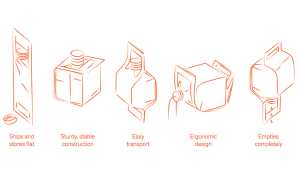
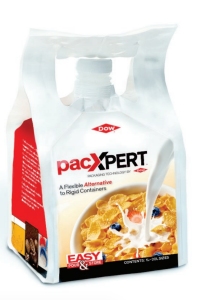
With its unique ergonomics, PacXpert has earned multiple awards for its engineering design while enabling the transition from rigid, large volume containers.  This flexible pouch offers lightweight durability, optimized marketing space, and more efficient use of resources throughout the product lifecycle.

According to a Dow case study on sustainability, “The environmental impact of transporting one-gallon PacXpert containers is approximately 20x lower than the transport of other one-gallon containers.”

PacXpert comes equipped with handles on both the top and bottom for easy lifting and precision pouring. For shipping and storage, the pouch lays perfectly flat, optimizing shelf space. When filled with product, the packaging cubes out to allow for space-efficient storage, stacking, attractive shelf appeal, and the ability to stand up either horizontally or vertically. 

 PacXpertThe packaging fitment can be interchanged for a wide variety of possible contents, ranging from non-edibles (i.e. paint, motor oil, cleaning products) to edibles (i.e. breakfast cereal, dog food, coffee). Since the packaging is transparent, the contents are easily viewed, and printing options for all four sides are virtually endless.
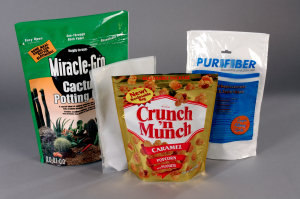
For more information visit www.macopkg.com or www.dow.com/pacxpert.

About Maco Pkg

Maco Pkg of Newark, NY has manufactured innovative, high quality packaging for a wide variety of industries for over 80 years. Within their 240,000-square-foot facility, they specialize in flexible packaging, contract packaging, and customized packaging solutions. Maco has serviced the US Military, food and beverage, industrial, automotive, medical and dental, health and beauty, electronics, and photography markets.

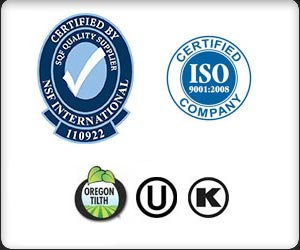
As an ISO 9001:2008, SQF 2000 Level 3 certified facility, Maco Pkg converts roll stock into pouches, film bags, standup pouches, side gusset bags, sheets, flexible packaging, speciality items, and much more. Maco Pkg is capable of packaging kosher and Oregon Tilth Organic certified products, and is FDA compliant. Maco’s services include consultations, prototype packaging, package manufacturing, sourcing packaging materials, trials and samples, and large runs.

Maco Pkg is committed to preserving the environment and works closely with biodegradable material suppliers to manufacture eco-friendly products. For more information, please contact Tom Seymour at Maco Pkg: tom.seymour@macopkg.com; phone: (315) 226-1028, or go to www.macopkg.com.   

About Dow

Dow (NYSE: DOW) combines the power of science and technology to passionately innovate what is essential to human progress. The Company is driving innovations that extract value from material, polymer, chemical and biological science to help address many of the world’s most challenging problems such as the need for clean water, clean energy generation and conservation, and increasing agricultural productivity.

Dow’s integrated, market-driven, industry-leading portfolio of specialty chemical, advanced materials, agrosciences and plastics businesses delivers a broad range of technology-based products and solutions to customers in approximately 180 countries and in high-growth sectors such as packaging, electronics, water, coatings and agriculture. In 2015, Dow had annual sales of nearly $49 billion and employed approximately 49,500 people worldwide.

The Company’s more than 6,000 product families are manufactured at 179 sites in 35 countries across the globe. On June 1, 2016, Dow became the 100 percent owner of Dow Corning Corporation’s silicones business, a global company with sales of greater than $4.5 billion in 2015, 25 manufacturing sites in 9 countries and approximately 10,000 employees worldwide. References to “Dow” or the “Company” mean The Dow Chemical Company and its consolidated subsidiaries unless otherwise expressly noted. More information about Dow can be found at www.dow.com.


A Powerful Product Receives Powerful Packaging

By | flexible packaging | No Comments
packaging company

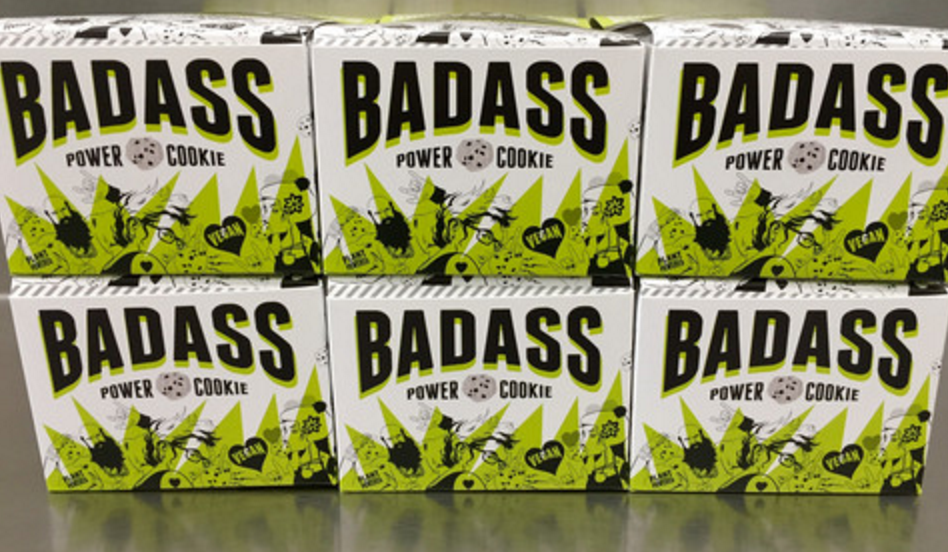
Badass Power Cookie

When the Badass Power Cookie was first created, corporate owners were not convinced this nutritious yet delicious seaweed-baked cookie could survive in retail.

How Can a Cookie Pack a Punch?

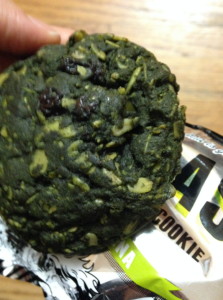
Because the cookie contains spirulina, a blue-green algae filled with vitamins and nutrients, it has a bright, emerald green color – a factor that could deter potential buyers. The product needed packaging that could restore its aesthetic and visual appeal. The CEO conducted extensive research to find a packaging company that was attentive to specific needs and details. 

Local Packaging Company Offers Barrier Packaging

packaging company

Spirulina

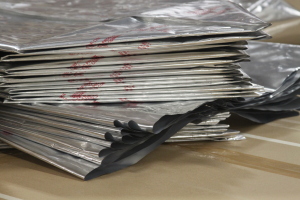
Eventually she met a local food packaging company, Maco PKG, who she found to be personable and extremely helpful. Maco PKG is responsible for the cookie’s Superhero foil packaging. This food packaging company provided not only the essential (and attractive) foil packaging, but also valuable contact information that helped the power cookie establish a place in retail. 

The Badass Power Cookie can now be purchased online and in select food markets. As they seek to extend the line of flavors, the manufacturers are already brainstorming how Maco pkg will customize additional packaging for them (maybe even additional flavors).


Why Flexible Packaging is Clearing the Shelves

By | flexible packaging | No Comments
flexible packaging

Stand-Up Pouches | Flexible Packaging

Why does flexible packaging continue to overwhelm the packing industry? Several key factors have played a significant role in the rising level of popularity for flexible packaging since it first hit the market.

Flexible vs. Rigid Packaging

This innovative type of packaging provides an economical alternative to traditional rigid packing. Using only 25% of the plastic used for its rigid counterpart, it weighs 70% less than rigid containers. Most product owners find that it’s easy and affordable to ship both domestically and overseas. It also provides more options for design, including the stand-up feature that offers eye-catching print options, billboard effect marketing, great product appeal, and space management.

Does Flexible Packaging Really Protect your Product?

flexible packaging

Barrier Bags | Flexible Packaging

Flexible packaging often uses film to provide a barrier against light (such as UV rays from the sun), grease, contamination, and most importantly, moisture and oxygen. Each of the barrier layers is specially selected based on your product’s physical characteristics. When manufacturers design for high barrier, they calculate the OTR (Oxygen Transfer Rate) and MVTR (Moisture Vapor Transmission Rate). The OTR & MVTR determines the amount of air or moisture that transfers through a designated section of film/material within 24 hours. A high rating ensures that the product is able to withstand a variety of stressors and gives it shelf stability.

For Example …
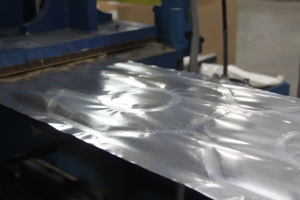
The most ideal barrier packaging has an OTR & MVTR that is extremely low (0.0005), which allows little oxygen and moisture to pass through for any amount of time (foil is a great example). It protects your product from contamination and impurities.

Biodegradable

flexible packaging

Foil Barrier Packaging | Maco PKG

In the past, most plastic packaging materials have not been able to decompose. But scientists have recently discovered a way to introduce an additive to the polymers used for flexible and rigid packaging to allow them to biodegrade. The additive prompts the decomposition to begin once the materials are exposed to a high microbial count (like that found in a landfill). The materials are reduced to water and carbon. This process typically occurs 18 months after exposure. The science behind this allows for similar barrier properties and shelf life and stability. The innovation in this arena continues to grow and will be the choice for packaging today and into the future.

Are you Ready to Try Flexible Packaging?

Is flexible packaging a viable option for your product? We can design packaging that suits your product’s temperature requirements, sizing recommendations, certification standards, and

barrier properties. Let’s find out if flexible packaging is a logical option for you – feel free to call +1-315-226-1000 and talk with a packaging specialist! 

Organic Packaging to Support your Organic Declaration: Part 1

By | flexible packaging, Organic packaging | No Comments

What is Organic Packaging?

According to the ITC (International Trade Center) and the WTO (World Trade Organization),

Organic Packaging

Organic Packaging

“The word organic is regulated both through international standards and through individual domestic regulations. These regulations include requirements on the production, processing and labeling of organic food.”

Food products described as “organic” are expected to have been produced holistically to standards which aim at achieving agro-ecosystems that are socially, ecologically and economically sustainable. The production system — processing and packaging — should be sustainable to create environment-friendly, high quality products.

What Sets Organic Packaging Apart?

There’s no visual differentiation between food products grown conventionally or organically, but you can showcase the difference with organic packaging — by using organic certification and packaging design.

Packaging for organic food has to be compatible with the food product packed within, and food regulations must be met. Materials used for food packaging, handling, and storage must be chosen accordingly. When it comes to organic packaging, you must keep in mind that organic products normally do not contain any chemicals, and consumers expect to receive organic products in the same condition when packed.

Organic packaging

Click the Image to learn more about Organic Packaging!

What’s the Point of Organic Packaging?

Safety for human consumption and environment protection are the most important criteria when choosing organic food packaging. When buying organic food, consumers expect to buy an all-around ecologically friendly product, including the packaging.

Take a look at our certifications! We do our best to create packaging that both promotes and protects your product. Have any questions? Call +1-315-226-1000
and we’d be happy to answer them and provide further details about our organic packaging.

Finish this Article! Take me to Part II

request a quote now! click here